Wednesday, June 4, 2008

Blog #14: " lets go dumpster diving, ill hold your ankles!"


There were so many wonderful bits of information in David Giles’s speech on the politics of hunger and dumpster diving, which further tied into the class themes of food and symbolism, food as a commodity, food aesthetics and food and the economy. At first, of course, I was grossed out by the thought of eating dumpstered food as others probably were as well, but after he talked about what makes food trash, I realized that in some dumpsters, the only difference is the context: a can v. a shelf. In this case, excluding actual rotten or spoiled food, the food that is thrown away is done arbitrarily by a date or because it is not aesthetically pleasing. Trashed food is a symbol for the ‘untouchable’ of society. This response seems so innate that it is hard to realize that waste is actually culturally defined.
Also, I really liked how he broke down the value of food items and how value, in the anthropological sense, is not a quantity but a culturally defined quality. Deeper thinking about the value of food and how quickly is can go from expensive to free reveals the high-turnover rate of obsolescence. Take the avocado story, once there was a fresher newer avocado, the slightly older ones become obsolete and thus worthless. Their worth is not an economical one, but part of a cultural taboo because trash, or any discarded items are NOT to be utilized. The category of trash is important to keep social order and the value of the shelved items. This is why dumpster diving is illegal. The seller needs his customers to buy food in order to make a profit and they won’t if they can get it for free out back.
Thinking about the economical chain of food and profit made me think that dumpstering was selfish and if enough people did it our economy would suffer. So that is why I was happy to hear about food not bombs, because I would much rather that food go to people who need is versus people who just don’t want to pay for it. The organization sounded very helpful to the large majority of people who cannot comply with the backwards rules by which food banks and soup kitchens operate. I am happy to know that they are doing their work and helping people in a very direct way. The speech definitely challenges my conceptions of trash and waste. I am not sure if I will go dumpster diving, but I will definitely think twice about throwing away food.

Thursday, May 29, 2008

blog #13: to eat meat or not to eat meat: that is the question


Our discussion of meat eating, sparking by Pollan’s Novel , brought up points that are very familiar to me, being a vegetarian for 7 years now. When people ask why I’m a vegetarian, there is a host of reasons that I could give. Honestly, I became a vegetarian in 8th grade for the lifestyle. I was a ballerina and wanted to be like the prima’s out there that restrict their diet to “healthy” foods and vegetarianism was key. It was a way toward a natural, yoga-loving, lifestyle. Vegetarianism, in the start, was a technology of self. Also my dad bet me that I couldn’t do it and when someone says I can’t do something, I do it. So I embarked on my vegetarian quest, which I found made me a little smug at dinner. I would turn my nose up at the meat my mother prepared and go on a somewhat-ignorant health rant about eating meat. Just like Teresa talked about in class. This smugness just turns people off and the message is lost. Luckily, I grew out of this pretty quick. Also, from this I had to learn how to cook my own dinner, which I am very grateful for now because I can cook great meals living on my own.
The second reason would be the treatment of animals. When people say “it’s the circle of life” excuse for eating meat, my reply is that I have no problem with killing the animals if they have actually lived and done their part in the circle of life. For example, I would not call how the chickens, pigs, or cows are ‘living’ as a life at all. Also, their part in the ecological circle of life is to eat certain things and fertilize the land, so to remove them from nature throws the chain off. I would absolutely be fine with eating meat that came from a wild animal or a animal that lived ‘free-range’ , until the people needed the meat. Which brings up another point, is that if we look at the ancestry of meat eating we find that yes they ate meat, but under very different circumstances. A long time ago, humans had to hunt that meat, which meant two things: 1) meat was rare and eaten when needed to survive, 2) the animals were in the wild, being part of the food chain and doing their part to keep nature in balance. If we look more recent, until the industrialization of meat corporations, there is the same pattern: meat was rare, the animals were still in nature. When the industrialization of the meat industry came, meat became the forefront of dinner and almost every meal. Instead of being a condiment to dinner, or one of the ingredients, it WAS THE ingredient. Also, with the industrialization, the animals were removed from the wild and treated as a commodity and nothing more.
So the reasons why I am a vegetarian has changed with knowledge and this class has opened my eyes up to even deeper issues around meat eating that will keep me vegetarian

Sunday, May 25, 2008

food portfolio: the food of the gods: chocolate


Chocolate is something splendid, seductive, and overall pleasurable, but how does this confectionary concoction come to have such a loving significance in the American diet? There are two contexts by which chocolate and love can be understood: chocolate as a romantic gift and chocolate in everyday meals. Each of these paradigms exemplifies chocolate’s significance in our greater culinary context and furthermore they intertwine with the themes of food and aesthetics, as social connection and as memories.

Chocolate and love are almost synonymous with each other, but how was such a connection created? Chocolate as a symbol for love is a symbol by association and can be further understood in the greater historical context of chocolate in relation to social class. For example, in The Purity, Soul Food and Sunni Islam, Rouse and Hoskins explore the way in which food and history became intertwined with class in relation to “slave food” and the class of African Americans in modern times. In the same manner, the history of chocolate acted to identify a class of people, which further explains why chocolate is a luxury and thus given as a symbol of love. From the 1500s until the industrial revolution, chocolate was a rare pleasure because the beans had to be shipped in from Central America and local shops were rare, so it could only be afforded by the rich. It was so fashionable that The French Court referred to it as ‘the drink of the court’. Thus, for someone to be able to give a gift of chocolate identified you as part of the fashionable high society. If one was not high class, buying their loved one chocolate was a great gesture because it showed their devotion in working hard and saving the money. People buy their loved ones chocolate, in part, because it is a rare luxury due to its past historical association with high class.

In addition, Rouse and Hoskins brought up what professor Anagnost calls the “technologies of self” or the strict restriction of diet to attain one’s ideal self. Looking at a more contemporary trend of food consumption, we find ‘the diet’, which arose once food became plentiful. In the past, food was rare so being ‘fat’ was a sign of wealth, but now food is plentiful and being thin signifies high class. The switch of the signification of body fat influenced the meaning of chocolate as a romantic gift. Now chocolate is a rarity, not because of its price, but because of its high fat and sugar content. For a loved one to buy you chocolate is like a loving pardon to your diet. It’s like saying, ‘it’s ok, eat and be happy don’t worry about your body because I love you.” Also, the act of giving food has always been a way of social connection but to give chocolate in light of its symbolism strengthens such a bond.

The love and seduction of chocolate can further be explored in relation to its aesthetics. In The Breast of Aphrodite, synesthesia, the synthesis of two or more senses was brought up in its exploration of the most amazing peach. Likewise, while enjoying chocolate, taste and smell become intertwined with touch. The smooth, velvety texture in your mouth can translate to the caress of your skin. Looking at any chocolate commercial in which a women puts a piece in her mouth, closes her eyes and moans as a brown silk blanket wraps around her illustrates such a mixture of sensations. With repeated exposure, the smell and taste of chocolate becomes conditioned to produce this heavenly synesthesia, even without taste.

Chocolate not only signifies love as a gift for special occasions, but it also has a place in our everyday diet. It acts to conclude a aa meal, satisfy cravings, and be a reminder of a mother’s love in a child’s lunch box. For example, my mother always said, “A meal is not complete unless it ends in chocolate.” You will often find her rummaging through the pantry after a meal and if you ask her what she’s looking for, she’ll reply “oh just a little something sweet.’ Her sweet tooth sentiments are shared by many after they finish a meal. Chocolate is perfect for dessert because it satisfies the palette and hunger, but it was actually an unsweetened luxury originally. The Aztecs used the cacao beans to prepare a thick, cold, unsweetened drink called chocolatl, which was a liquid so prestigious that it was served in golden goblets that were thrown away after one use. It wasn’t until the 1500s that chocolate was made sweetened with sugar cane to fit the European palette.

In addition to concluding a meal, chocolate is desired anytime around the clock when a craving kicks in. Women especially understand the chocolate craving, due to the hormonal changes that occur during the menstrual cycle. Chocolate cravings are something unique. They are something that cannot be satisfied by anything else. Perhaps because chocolate is connected to love, people crave chocolate in an attempt to remember the love and social connectedness that their chocolate memories provided. However, analyzing chocolate reveals that some “seductive” chemicals, theodromine, act to release dopamine in our pleasure reward centers of our brain. So a chocolate craving is a mixture of its biological properties with the greater social significance.

The way in which chocolate also acts to communicate love in everyday meals can be seen in the lunch box. Almost every afternoon, at lunchtime, I would peer into my brown bag and be overjoyed that my mother put a piece of Dove chocolate in for dessert. I would save it until the end of the meal, like a little blue-foiled treasure. Such a memory reminded me of Anne Allison’s The Obento as State Ideological Apparatus, in which she explores the significance of the obento being a labor of love. The lunch box is a place in which a mother’s love is communicated and chocolate, being a symbol of love, is a perfect medium for such a communication.

Packing chocolate in your lunchbox is not only a reminder of your mother’s love; it might just save your life. During WWII, the US government recognized the value of this high energy bar so much so that they made it part of the soldier’s rations. A WWII veteran remember that when they liberated an internment camp they were horrified by the numerous starving people that they quickly gave everyone their chocolate rations, which is the greatest gift–giving of chocolate of all time.

Chocolate and love are a strong symbol in our culture, so much so that even a young child can recognize its significance, just as I did during lunchtime. The way in which it gains its significance is through its aesthetics, ability to satisfy, and the loving memories that it creates. Chocolate has been regarded as the food from the gods and rightfully so, I would think most would agree.

Friday, May 16, 2008

blog #12 : the american meal: diet coke and ramen noodles


Ann, being the generous and kind-hearted professor that she is, treated us to the most American meal, (next to McDonald’s): diet coke and chicken ‘flavored’ Ramen Noodles. As I brought the fizzing blackish-brown liquid to my mouth and felt the bubbles spring up to tickle my nose, I took a drink. Aware of its corrosive qualities, I swallowed quickly and would not let it touch my teeth. Immediately, the taste of aspartame gave me a headache and I felt the compulsion to brush my teeth. Then I took on the Styrofoam noodles. As I brought the hot steaming cup to my mouth, I felt the steam give me what I call a ‘ramen facial’. As if some Swedish spa offered such a thing, “ ahh yes now just lie here and let the chicken flavor penetrate your pores”. It was like chewing foam flavored with a silver chicken packet. How do they cram a chicken into the little silver thing? Oh yeah, the taste has nothing to do with the animal, but rather a reminder of such flavor, but mainly it’s just salt. This chicken flavor is a design of the convenience market. As Roger Haden discussed in Taste in the Age of Convince article, technologies have been produced to synthesize flavors all in the name of convenience. People are on the go and do not have the time to cook chicken soup all day or even get a real chicken. This chicken flavor was designed to create a meal that tasted like it had been cooked with chicken, without the inconvenience of actually having to cook and prepare an animal. Haden refers to these types of meals as ‘chickenized’. To have the word chicken in the title of a meal now only means that it tastes like chicken, not that it actually have the animal meat in it. So many products have ‘chickenized’ their meals that people have only an abstract idea of what chicken really tastes like. It is no wonder that people say everything tastes like chicken because most of those food items have been ‘chickenezed’.

This culinary endeavor haunted me for hours after the meal with bloating, a headache and an upset stomach, but oddly enough I couldn’t stop eating it even though I knew it would make me sick and it tasted nasty. I forced myself to put it on another’s desk just to make me stop, but Why? I thought it was a unique experience, explained by my self-diagnosed food addiction, but through sharing our experienced in class is seemed that a majority has such a problem of “ eww, uhh, yuck” and they take another and another drink or bite. Perhaps Americans on the whole are addicted to food, it is such a compulsory habit that even conscious intervention of “that’s will make you sick, STOP EATING it!” cannot change the habitual behavior of eating what it in front of you. Perhaps it is because we eat so fast our brain does not have the time to register fullness. By the time we get the satiated sign we are completely stuffed to the brim.

blog #:11 Are my John's Hoppin'?


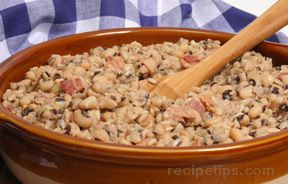
Today in class, our group worked on preparing a southern dish called Hoppin' Johns. A one-pot dish made with black-eyed peas, onions, garlic, vegetable broth, and a whole lot of spice or "BAM" as Emerl would put it. I have actually never heard of this dish. Having no ancestry in the south, this dish was completely foreign to me, but I could only imagine how it got its name. I figured it was probably racist, a “dish of the colored folk in the deep south” or something horribly racist like that. I made such a quick conclusion based my own connotations I have with the south due to their history of racism. Also, the other group was making collard greens, which I think their name originated from ‘colored greens’ because typically black people ate and prepared the food. This is another way in which food is a medium by which history and cultural ideals (hopefully of the past) are impressed upon. In an earlier blog entry, I discussed that way in which history and food are linked up in citing to Rouse and Hoskins Purity, Soul Food, and Sunni Islam. This activity was just a hands-on form of learning about such a connection.

When we were preparing the food, we constantly checked it for 'what it needed'. When tasting it and thinking what is it missing, I pulled up a mental image of what the ideal southern Hoppin' John tasted like. I pictured a Southern black family from the early 1900’s cooking and preparing it for hours until it was perfect, with generations of input on the taste. But I was at a disadvantage because I have never tasted nor even heard of

hoppin johns before. What is the ideal taste for the dish? Is there one? All of these concerns in attempting to create a real authentic hoppin' john's meal lead me to the question to which I said out loud and in my head many times during the cooking, “IS MY JOHN’S HOPPIN’”?

Friday, May 9, 2008

blog #10: Food Riots and Raj Patel: Eat your food, People are starving in china


During Raj Patel’s speech about food riots, the biggest wakeup call was when he so eloquently and humorously said that ‘ American’s have this notion that we can solve would hunger and food issues by shopping.’ It made me laugh, but then thinking deeper about it I realized how true it was. We think if we just buy organic or free range, then we are doing our part. What we don’t see is that corporation’s advertising feed into the ‘organic’ fad and that is partly why we feel this consumer obligation. People are becoming aware of these issues and corporations take advantage of that desire to help. Tied into our need to help the food crisis through shopping is our idea of democracy. Our democratic nature tells us that if we just choose right, we are voting for the political policy about food issues and making a difference on the environment. Choosing Pepsi or Coke is not democracy as Raj Patel reminded us. We only think it is. There is no right choice when it comes to choosing our food because that right choice is simply not available in the market or even if it is, choosing it is not voting on political policy. The democratic consumer illusion is one we have to wake up from in order to really critically think about our food crisis and how to take steps that will produce change.

Raj’s speech also brought to light the complex and dynamic nature of these problems. There are so many factors that tie into the problems that a solution is not easy to find. It is important to realize these complexities because some solutions may sound great, with out thinking ahead, they may turned out to hurt more than they help. Honestly, Raj Patel’s speech was great at unmasking the dynamics of the issues, but I feel like he came up short in explaining what we can do to help. I still feel like I have no clue what the right actions are, but maybe it is because there is no clear cut solutions. Mothers say, "eat your food, there are people starving in China" but what can we do about those kids in China? When I was a little kid and my mother would say the same thing, I remember I actually saved my food and packed it up in a box marked "China". Maybe that's the solution! (only joking)

Wednesday, May 7, 2008

blog #9: What’s really in a matzo ball?


Rouse and Hoskins explore the relationship between the symbolism of food and the greater historical and social context in Purity, Soul Food, and Sunni Islam. Their comments about the connotation between soul food and the history of slavery reminded me of my own personal relationship between food and my Jewish heritage. For example, when slavery was recent and being black carried a negative connotation, as if to be black was polluting in some way, the food associated with such discrimination was banned by the leaders of Black Islam as a means of purification of “the ideological poisons that made them participants in their own degradation” (236). In the same manner, as my father was growing up around the anti-Semitic sentiments of the 1940’s, such foods that would signify him as being Jewish were prohibited (or made secret) by his family for fear of anti-Semites.

Both of these examples exemplify the way in which food taboos are a relational concept, rather than in the essence of the object itself. For example, the actual food that constitutes ‘soul food’ is nutritious and appetizing, but in relation to the history of slavery and the racist sentiments rooted in the movement, the food became a symbol of the subordinate slave by association. Therefore, there was a desire in the African American Islamic community to separate themselves from that association. However, in the mid 1980s and 1990s, as racist sentiment started to fade after the civil rights movement, there was a reclaiming of their historical identity through food as a means to reconnect. Likewise, there was that same association between being Jewish and food. I knew in my father’s family, in the 1940’s, there was such a fear of being recognized and labeled as Jewish that they pretended in every aspect of their lives to not be Jewish, this included food as well (although we’ve managed to retain the neuroticism, kvetching, and good old paranoia).

In the same respect, in my generation, I am proud of being Jewish, due to the historical changes that have occurred since the 1940s, and therefore am attempting to reclaim my Jewish identity. I remember while I was learning to make matzo balls, I felt a connection with my heritage, ancestors, and culture. Through food practice, culture is taught to newer generations. The ability to prepare food is also a virtue that helps construct one’s sense of self in relation to their greater cultural context. For example, I was overjoyed when my father commented on my matzo balls, saying that his grandma used to make ‘lead balls that could knock out a wall’ while mine were light, moist, and fluffy.

Food in relation to culture is a strange thing. How does the food I make and prefer identify me with a certain culture? After all, what's really in a matzo ball? Certainly not just ingredients, but whole histories of people that share that identify themselves as one culture. I think that this association occurs through the history and geography of food as it ceases to be just food and becomes a cultural symbol.